
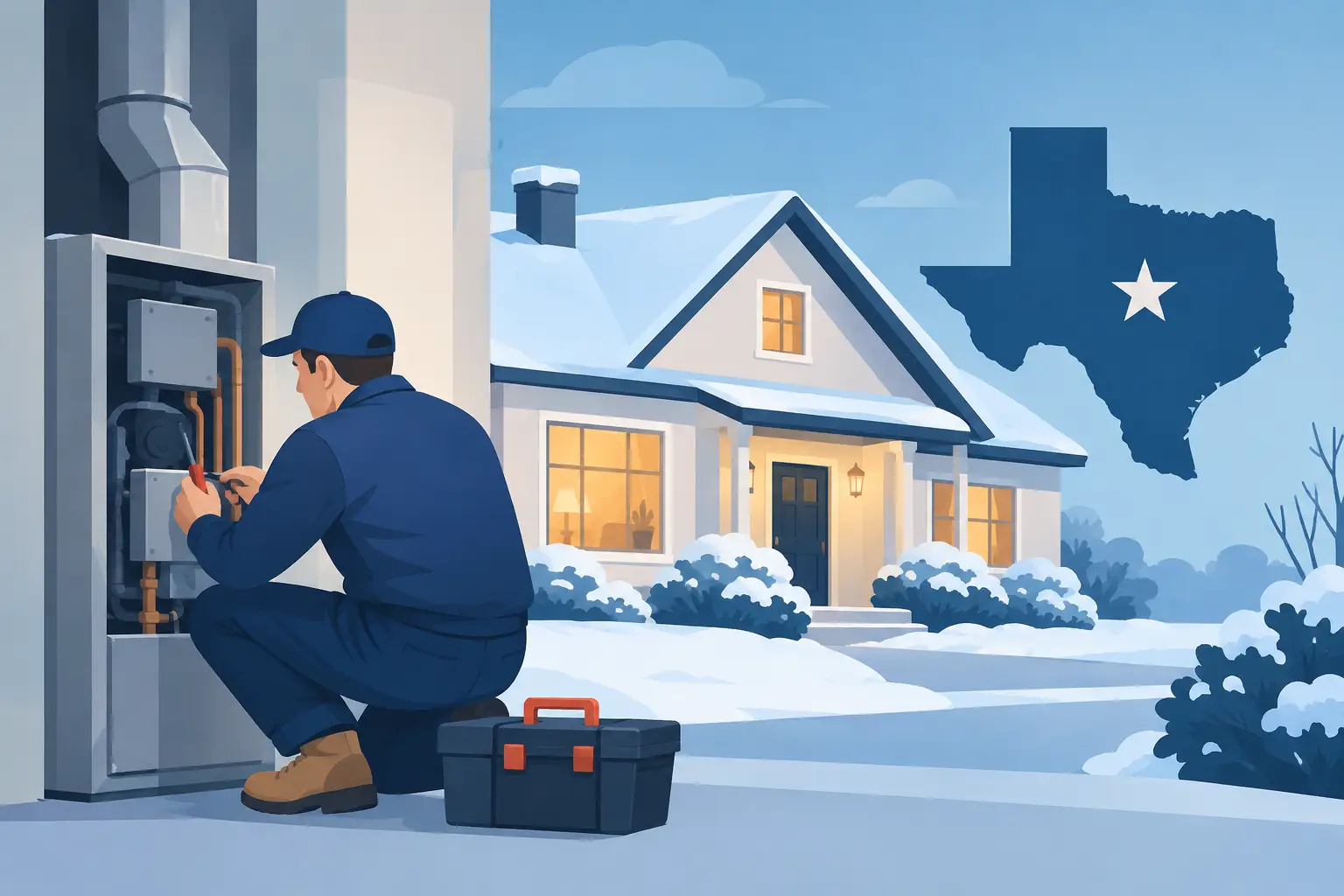
A pilot light that will not stay lit is more than an inconvenience when a North Texas cold front moves in. Furnace pilot problems can stop heat before it reaches your rooms, leave a business uncomfortable for employees and customers, and signal an issue that should not be ignored. The good news is that many causes are repairable – and a failed pilot does not automatically mean you need a new furnace.
Older gas furnaces commonly use a standing pilot: a small, continuously burning flame that lights the main burners when the thermostat calls for heat. Newer systems generally use electronic ignition instead. Knowing which type of system you have helps avoid confusion and keeps troubleshooting focused on the right parts.
First, Know When to Stop and Call for Help
If you smell natural gas, hear a hissing sound near the furnace or gas line, or suspect a gas leak, do not try to relight the pilot. Leave the building, avoid switches, flames, and electronics, and contact your gas utility or emergency services from a safe location. A gas odor is never a wait-and-see situation.
You should also stop if the furnace has a yellow, wavering, or sooty pilot flame. A healthy pilot is usually steady and mostly blue. Yellow flames can point to incomplete combustion, dirt in the burner area, or a ventilation concern. Those conditions need a trained HVAC technician to inspect the furnace safely.
If there is no gas smell and the pilot is simply out, your furnace door may include relighting instructions. Follow the manufacturer’s procedure exactly. Do not improvise with a match, and do not keep trying repeatedly if the pilot will not light or goes out again. Repeated attempts can create risk while doing nothing to solve the underlying problem.
Common Furnace Pilot Problems
A dirty pilot opening
The small opening that supplies gas to the pilot can collect dust, lint, and residue over time. When that happens, the flame may be too small to heat the safety sensor correctly. You may see a weak flame that flickers, lifts away from the assembly, or disappears after a few minutes.
This is often a straightforward repair, but it calls for careful cleaning and inspection. The opening is small, and using the wrong tool can damage it or alter how gas flows. A technician can clean the pilot assembly, verify the flame pattern, and check that the burners ignite correctly afterward.
A failing thermocouple
On many standing-pilot furnaces, the thermocouple is a safety device positioned in the pilot flame. When it senses enough heat, it tells the gas valve that it is safe to keep supplying gas to the pilot. If the thermocouple is worn, loose, dirty, or no longer positioned in the flame, the pilot may light briefly and then shut off as soon as you release the control knob.
A bad thermocouple is one of the most common reasons a pilot refuses to stay lit. It is also a good example of why repair-first service matters. Replacing a small safety component may restore reliable heat without turning a manageable repair into an unnecessary equipment replacement conversation.
Drafts or combustion-air issues
A pilot flame needs a stable environment. Strong drafts from a nearby opening, problems with the furnace cabinet, or restricted combustion air can blow or disrupt the flame. In some homes, changes made during remodeling, weatherization, or storage around the utility area can affect the furnace’s airflow.
Keep the area around the furnace clear of boxes, paint, cleaning products, and other stored materials. Aside from being a fire-safety concern, clutter can make service access difficult and interfere with proper airflow. A technician can determine whether the issue is an ordinary draft or a larger venting or combustion-air concern.
A gas supply or gas valve problem
If the pilot will not light at all, the furnace may not be receiving enough gas. The cause could be as simple as a closed shutoff valve after service, but it could also involve the gas valve, regulator, control system, or another supply issue. Because these components handle fuel and safety controls, they are not a homeowner repair.
Before assuming the furnace is at fault, check whether other gas appliances are working normally. That observation can help a technician narrow down the source of the problem. It does not replace a professional diagnosis, especially if you notice a gas odor.
A thermostat issue that looks like a pilot issue
Sometimes the pilot is burning normally, but the furnace still will not heat. The thermostat may not be calling for heat, its batteries may be low, or a wiring or control-board issue may be preventing the furnace from starting its heating cycle.
Set the thermostat to Heat, raise the setting several degrees above room temperature, and confirm the system switch is on. If the pilot is lit but burners never come on, turn the system off and schedule service. Continually cycling controls or removing furnace panels can make a simple diagnosis harder and may create a safety problem.
What You Can Check Safely Before Scheduling Service
There are a few practical checks that do not require taking apart the furnace. First, make sure the thermostat is set correctly and has fresh batteries if it uses them. Next, check the furnace power switch and the circuit breaker. A gas furnace still relies on electricity for controls, the blower, and many safety features.
Check the air filter as well. A severely clogged filter does not usually extinguish a standing pilot, but it can cause overheating, poor airflow, and limit-switch shutdowns that make the whole system seem unreliable. Replace a disposable filter with the correct size and airflow rating for your system.
Finally, look at the furnace through any available inspection window. Do not remove panels or touch internal components. Note whether the pilot is off, weak, yellow, or normal-looking, and whether the furnace makes unusual clicking, booming, or repeated starting sounds. Those details give your HVAC professional a better starting point.
Why a Pilot Keeps Going Out
A pilot that goes out once after a major wind event may be different from one that fails every few days. Frequency matters. A recurring outage usually points to a failing thermocouple, an obstructed pilot assembly, an unstable flame, or a control issue. Relighting it may bring temporary heat, but it will not correct the reason the safety system is shutting it down.
Age also matters, though it is not the only factor. An older furnace can often be repaired affordably if the heat exchanger, burners, controls, and overall condition remain sound. If repairs are becoming frequent, efficiency is poor, or a major safety-related component has failed, it may be time to discuss options. The right decision depends on the repair, your budget, the system’s condition, and how long you plan to stay in the property.
For commercial properties, a recurring pilot issue can affect more than comfort. It can disrupt operating hours, leave tenants dissatisfied, and expose a weak point in a heating system that needs dependable performance. Preventive service helps catch dirty burners, worn sensors, loose connections, and airflow restrictions before a cold morning becomes an urgent call.
Preventing Future Pilot Light Trouble
Annual heating maintenance is the most reliable way to reduce furnace pilot problems. During a professional visit, the technician can inspect the pilot or ignition system, burners, safety switches, venting, electrical connections, gas pressure, filter condition, and overall operation. This is also the right time to identify parts that are wearing out before they fail during the coldest stretch of the season.
Between visits, change filters on schedule, keep the furnace area clean and accessible, and pay attention to changes in how your system starts or heats. A furnace that takes longer to warm up, cycles more often, makes new noises, or produces uneven temperatures is asking for attention before it becomes a no-heat emergency.
At Custom Climates, the goal is to find the cause, explain the repair clearly, and help you make a practical decision for your home or business. When the pilot will not stay lit, getting an honest diagnosis early can protect your comfort, your budget, and your peace of mind when Texas weather turns cold.
Leave A Comment