
A packed office, a busy retail floor, or a restaurant dining room can feel the effects of a failing air conditioner in minutes. In North Texas, commercial HVAC is not simply a building expense. It is part of how your business protects employees, welcomes customers, safeguards equipment, and keeps daily operations moving when summer temperatures climb.
For business owners and facility managers, the goal is not always to buy new equipment. Often, the right answer is a timely repair, a maintenance adjustment, or a practical plan for an aging system. Knowing the difference can prevent an uncomfortable surprise and help you make a decision that respects both your budget and your building.
Why Commercial HVAC Reliability Matters
A commercial system works harder than most people realize. It may run for long business hours, serve multiple rooms with different comfort needs, and deal with frequent door traffic, heat-producing equipment, computers, kitchen appliances, or large groups of people. Even a small performance issue can become a bigger problem under that demand.
When cooling is uneven, employees may struggle to focus, customers may leave sooner than planned, and temperature-sensitive inventory or equipment may be at risk. During winter cold snaps, unreliable heating can create the same disruption. A comfortable building supports the people inside it, but consistent performance also helps protect your business from lost productivity and emergency expenses.
Energy use matters, too. A system with dirty coils, restricted airflow, a worn component, or a thermostat problem may continue operating while using more energy than it should. Your utility bill can rise before the equipment stops working altogether. That is why a sudden increase in operating costs deserves attention, especially if it is paired with hot and cold spots or longer run times.
Signs Your Commercial HVAC System Needs Attention
Not every issue means the system is near the end of its life. A professional inspection can identify whether a repair is sensible or whether the unit has reached a point where replacement planning makes more financial sense. The key is to address changes early rather than waiting for a complete shutdown.
Call for service when your building has persistent temperature differences between rooms, weak airflow, unusual noises, water near indoor equipment, odors from vents, or a system that cycles on and off repeatedly. Employees may also notice stale air, increased humidity, or rooms that never seem to reach the thermostat setting. These concerns are worth investigating even if the equipment is still running.
A business should also pay attention to patterns. Does the system struggle only on the hottest afternoons? Does one area become uncomfortable after a certain time of day? Does the equipment need repeated repairs for related problems? Details like these help a technician diagnose the source of the issue instead of treating only the symptom.
A repair-first approach protects your budget
A good service recommendation starts with an honest look at the equipment’s condition, repair history, age, efficiency, and expected operating demands. Replacing a part on a system with plenty of useful life can be the responsible choice. On the other hand, putting substantial money into an older unit that breaks down repeatedly may only delay a larger expense.
There is no one-size-fits-all answer. A small office with limited operating hours may have different needs than a retail space, medical office, warehouse, or restaurant. The right recommendation should account for your timeline, comfort requirements, budget, and plans for the property. You should understand what is wrong, what the repair will accomplish, and what alternatives are available before approving the work.
Preventive Maintenance Is Business Protection
Emergency repairs are sometimes unavoidable, especially after severe weather or during peak summer demand. But many commercial HVAC problems develop gradually. Preventive maintenance gives your system a better chance to handle the season ahead and gives your team time to respond to smaller issues before they interrupt business.
During a thorough maintenance visit, a technician can inspect electrical connections, check refrigerant performance, test controls, evaluate moving parts, inspect drainage, clean components where needed, and look for signs of wear. The exact work depends on your equipment, but the purpose stays the same: improve reliability, support efficient operation, and catch concerns early.
Filter changes are among the simplest and most valuable tasks. A clogged filter restricts airflow, forces equipment to work harder, and can contribute to comfort problems. The right replacement schedule depends on the type of filter, occupancy, building use, pets, dust, construction nearby, and indoor air quality needs. A heavily used business often needs more frequent attention than a lightly occupied office.
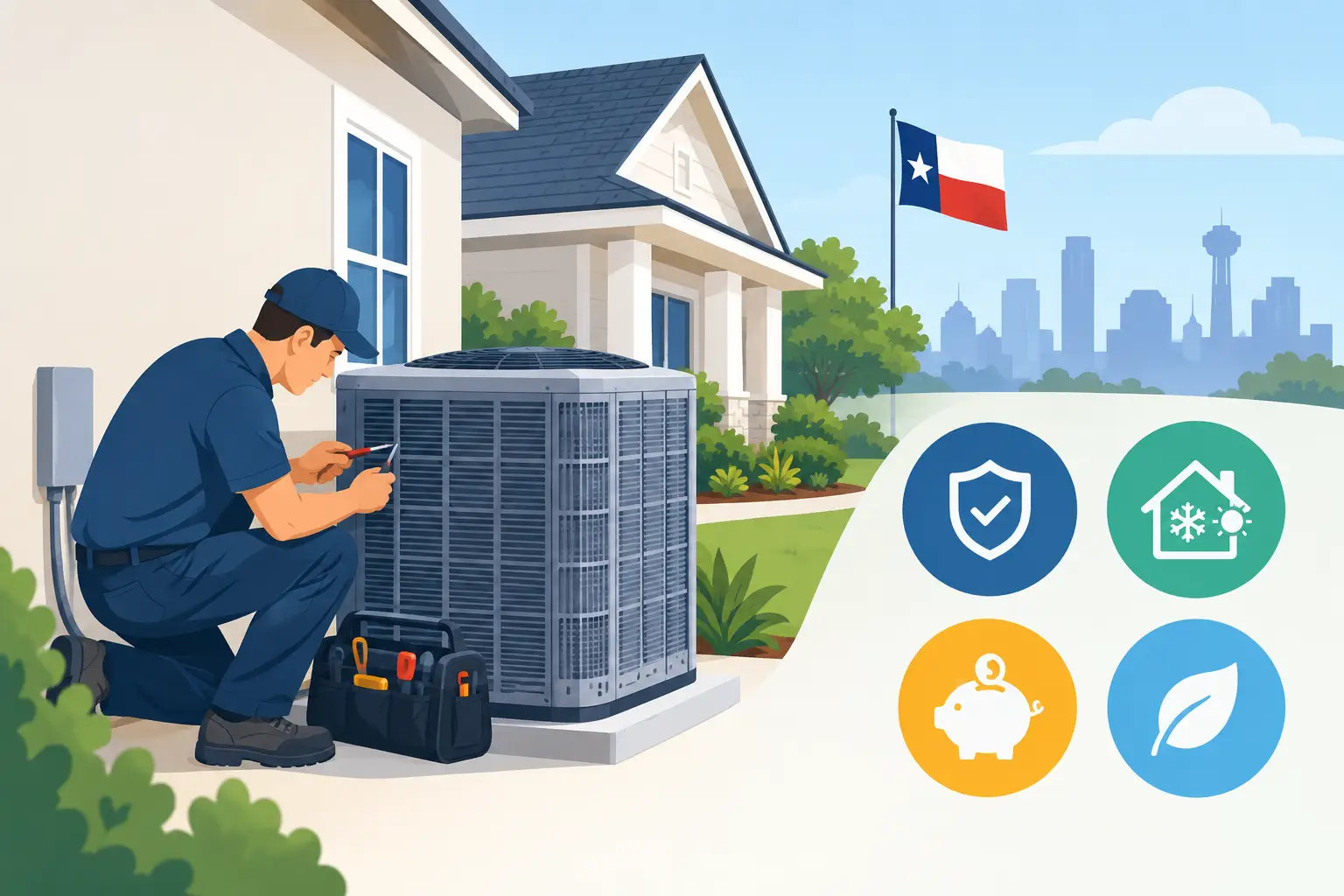
Your team can help between service visits by keeping vents unobstructed and making sure outdoor units have clear space around them. Leaves, grass clippings, stored materials, and other debris can limit airflow. It is also helpful to report changes promptly instead of asking employees to tolerate an uncomfortable workspace for weeks.
Plan Ahead for Aging Equipment
Once a commercial system is around 10 years old, it is wise to start watching performance and repair costs more closely. That does not mean replacement is automatically necessary. Many well-maintained systems provide dependable service beyond that point. However, aging equipment can become less efficient, require harder-to-source parts, and face a higher risk of downtime when demand is highest.
Planning ahead gives you more control. You can review equipment options before an emergency forces a rushed decision, consider financing where appropriate, and schedule work around your business hours. You can also assess whether the existing system is properly sized for the space. A building that has been remodeled, expanded, or repurposed may have different heating and cooling needs than it did when the original equipment was installed.
Oversized and undersized equipment both create problems. An oversized system may cycle too quickly and struggle with humidity control, while an undersized system may run continuously during extreme weather without keeping up. Proper recommendations should be based on the building itself, not simply on matching the size of the unit being replaced.
Indoor air quality deserves a place in the conversation
Temperature is only one part of a comfortable commercial environment. Shared spaces can collect dust, allergens, odors, and other airborne particles, particularly when a building has high occupancy or limited ventilation. Indoor air quality solutions may help improve filtration, reduce airborne contaminants, manage humidity, or address specific concerns in your facility.
The best option depends on the problem you are trying to solve. A filtration upgrade may make sense for one office, while humidity control or a different air-cleaning solution may be more useful in another setting. An honest assessment begins with your building use and the concerns people are actually experiencing, not a generic product pitch.
What to Expect From a Commercial HVAC Partner
For a business, service should be clear, responsive, and built around minimizing disruption. You need a technician who can explain the issue in straightforward language, provide realistic options, and respect that a problem during business hours affects more than the equipment itself.
Ask whether the provider offers preventive maintenance and service agreements, how they handle urgent repair needs, and whether their work is backed by warranties. Consistent maintenance records also make it easier to track recurring issues and make informed decisions as equipment ages.
Custom Climates serves North Texas businesses with the same neighborly care we bring to local homes. That means looking for the repair that makes sense first, offering customized equipment guidance when replacement is truly warranted, and treating your comfort and budget with respect.
A well-maintained system will not eliminate every repair, but it can give your business more dependable comfort, clearer planning, and fewer unwelcome surprises. Before the next stretch of Texas heat puts your equipment under pressure, schedule a professional evaluation and give your building the attention it needs to keep serving the people inside it.




Leave A Comment