
Pet hair is easy to spot on the sofa. Pet dander is not. Those tiny skin flakes can stay suspended in the air, settle into rugs and upholstery, and circulate through your home’s HVAC system. Choosing an air purifier for pet dander can reduce the airborne particles your family breathes, but only when the unit is properly sized, correctly filtered, and used alongside good cleaning and HVAC habits.
For families in North Texas, this can matter even more during long stretches of hot or cold weather, when windows stay closed and the air conditioner or furnace runs for hours at a time. Cleaner indoor air is not about making a home sterile. It is about making it more comfortable for the people and pets who live there.
What an Air Purifier Can and Cannot Do for Pet Dander
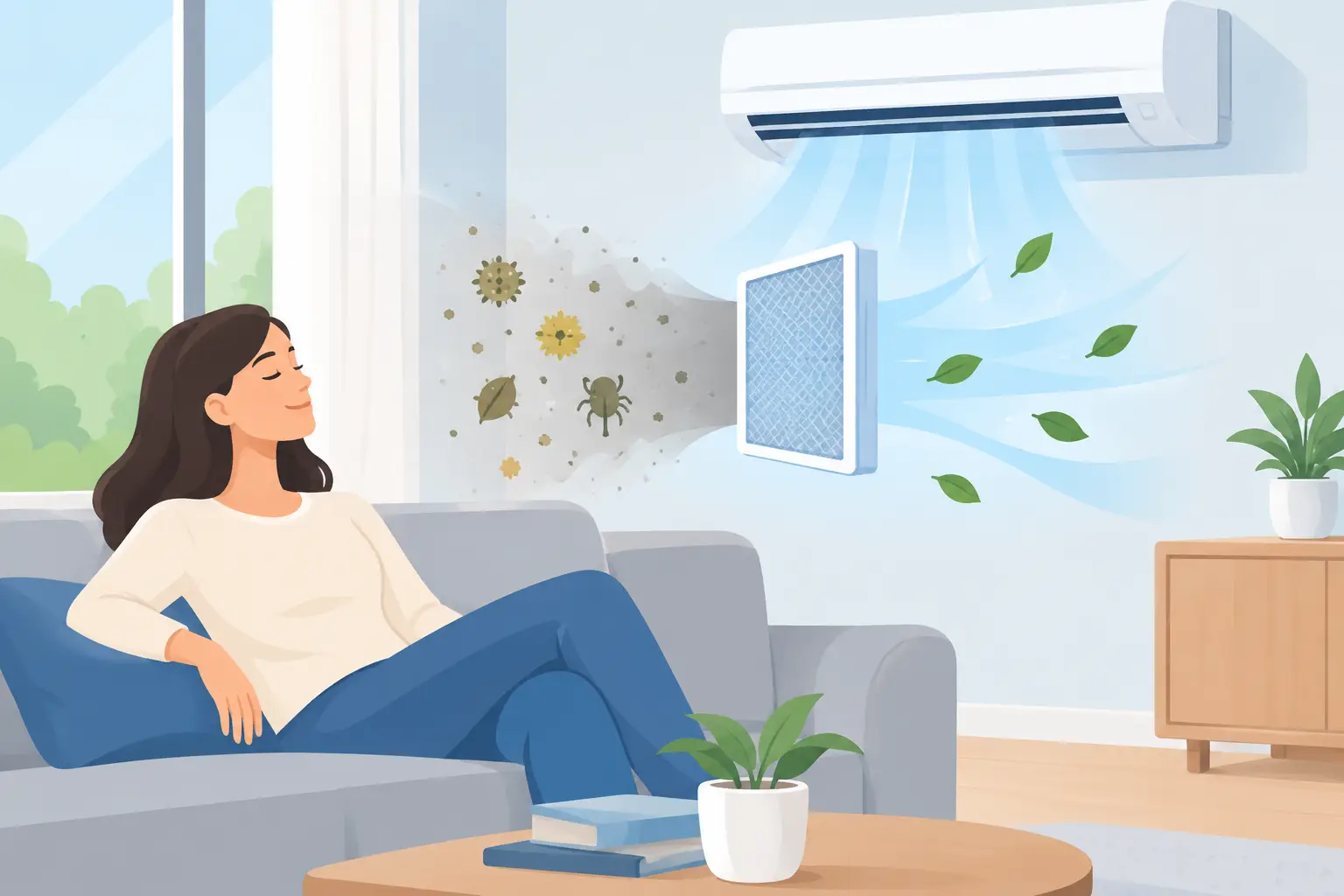
An air purifier draws room air through a filter and captures particles before returning cleaner air to the space. A quality unit can help lower the concentration of airborne dander, dust, pollen, and other fine particles. That may be especially helpful for household members who deal with allergies, asthma, or irritation around pets.
It cannot remove every allergen from a home. Dander already embedded in carpet, pet beds, blankets, curtains, and furniture will remain until those surfaces are cleaned. An air purifier also will not solve a moisture issue, a dirty duct system, a poorly sealed return, or an HVAC filter that has gone unchanged for months.
Think of it as one helpful layer in a larger indoor air quality plan. Regular vacuuming with a HEPA-equipped vacuum, washing pet bedding, grooming pets, and maintaining your heating and cooling equipment all support better results.
What to Look for in an Air Purifier for Pet Dander
The filter is the first thing to check. For pet dander, look for a true HEPA filter. HEPA filtration is designed to capture a very high percentage of fine airborne particles, including the small particles that often carry pet allergens. Be careful with vague phrases such as “HEPA-type” or “HEPA-style.” Those descriptions do not necessarily mean the unit meets the same filtration standard.
A pre-filter is also useful in homes with pets. It catches larger debris, including visible hair, before it reaches the main filter. That can help the HEPA filter last longer. If odors are part of the concern, choose a unit with a meaningful activated carbon filter. Carbon is intended to adsorb odors and certain gaseous compounds, while HEPA handles particles. One does not replace the other.
Avoid buying based on price alone. A lower-cost purifier may have expensive replacement filters, weak airflow, or coverage claims that only apply on the lowest fan setting. The ongoing cost and availability of replacement filters deserve just as much attention as the purchase price.
Match the purifier to the actual room size
A purifier needs enough airflow to clean the room repeatedly throughout the day. Coverage labels can be helpful, but the cleaner air delivery rate, often called CADR, gives a more practical indication of how much filtered air the unit can move.
Start with the room where symptoms or pet activity are most concentrated. For many households, that is the primary bedroom, family room, or home office. Measure the room’s square footage, then choose a unit rated for that space at a meaningful operating speed. It is usually better to select a purifier rated slightly above the room size rather than one that must run at its loudest setting all day.
Ceiling height matters, too. A room with vaulted ceilings contains more air than a standard eight-foot room. An open-concept living area may need a larger unit or more than one purifier, especially if it connects directly to the kitchen, hallways, and other occupied spaces.
Consider noise, placement, and daily use
A purifier that is too loud often gets turned off. Check the sound level at the fan speed you expect to use most often. In a bedroom, a quieter unit may be worth the extra cost because consistent operation is more valuable than a powerful machine that only runs occasionally.
Place the purifier where it has room to pull in and discharge air. Do not tuck it behind a couch, block it with curtains, or set it directly against a wall. Keep doors and windows closed as much as practical while the unit is working, especially during peak pollen periods or when outdoor air quality is poor.
A small purifier cannot clean an entire house from one corner of the living room. Portable units work best in defined rooms. If your household needs support across multiple rooms, two properly sized units can be more effective than one oversized expectation.
Your HVAC Filter Still Matters
A portable air purifier helps clean the air in a room. Your HVAC system has a different role: it filters air as it moves through the return ducts and conditions the home. When the system runs, a clean, properly selected HVAC filter can capture particles before they recirculate.
Many homeowners assume the highest MERV rating is always the best choice. It depends. Higher-efficiency filters can catch smaller particles, but some can also add resistance to airflow. If a filter is too restrictive for the equipment or is left in place too long, it can contribute to reduced airflow, comfort issues, and added strain on the system.
The right filter choice depends on your system design, filter cabinet, blower capacity, household needs, and maintenance habits. A standard one-inch filter has different limitations than a properly installed media filter cabinet. This is one reason a tailored recommendation matters more than simply grabbing the highest-numbered filter from the store shelf.
If you have pets, check your filter more often than the packaging’s maximum change interval. In homes with multiple pets, shedding breeds, construction dust, or frequent system use during a Texas summer, a filter may need attention sooner. A filter that looks gray and loaded with debris is not doing your system any favors.
Whole-Home Options May Make Sense for Larger Needs
Portable purifiers are often a smart starting point because they are simple, targeted, and relatively affordable. They can be especially useful for bedrooms, nurseries, offices, and spaces where pets spend the most time.
For a larger home, ongoing allergy concerns, or a business with shared indoor spaces, a whole-home air-cleaning solution may be worth considering. These systems are installed as part of the HVAC equipment and treat air as it circulates through the ductwork. Depending on the setup, options can include upgraded media filtration, electronic air-cleaning equipment, or other indoor air quality components.
There are trade-offs. Whole-home equipment requires professional evaluation and installation, and no single solution is right for every property. Duct condition, system airflow, existing filtration, square footage, budget, and comfort goals should all be considered before recommending an upgrade. A good contractor should explain what a product can realistically do and whether your current system can support it.
Be cautious with products that focus mainly on producing ozone or make broad claims about eliminating every indoor contaminant. For most homes, dependable filtration, proper airflow, humidity control, and regular maintenance are the practical foundation of cleaner air.
Simple Habits That Help Keep Dander Down
An air purifier works better when it is not asked to handle every source of dander on its own. Vacuum floors and upholstered furniture regularly, ideally with sealed HEPA filtration. Wash pet bedding often, and clean blankets, throws, and other fabric surfaces where pets rest.
Brush pets outdoors when possible, particularly during shedding seasons. Bathe them according to guidance from your veterinarian or groomer. Over-bathing can irritate a pet’s skin, so more is not always better.
Keep supply and return vents clear of furniture, pet beds, and clutter. If rooms are dusty despite regular cleaning, airflow is weak, or filters become dirty unusually fast, it is worth having the HVAC system inspected. Air quality concerns sometimes point to a filter fit issue, duct leakage, return-air problems, or equipment that is not moving air as it should.
When to Ask an HVAC Professional for Help
A purifier is a sensible purchase for many pet-owning households, but recurring allergy symptoms, persistent odors, excessive dust, or uneven comfort can call for a closer look. Custom Climates can help homeowners and local businesses evaluate the condition of their HVAC filtration, airflow, and indoor air quality options without pushing a one-size-fits-all answer.
The best next step may be a well-sized portable purifier and more frequent filter changes. Or your property may benefit from an HVAC filtration upgrade, maintenance service, or a repair that restores proper airflow. The goal is not to sell equipment you do not need. It is to help your family breathe easier while keeping your heating and cooling system dependable.
A clean filter, a properly sized purifier, and a comfortable place for your pet to rest can make a noticeable difference over time. Start with the room where your family spends the most time, then build from there based on what your home actually needs.




[…] and regular system care may make the most practical difference. For a home with persistent dust, pet dander, or musty odors, the answer may include duct improvements, humidity control, or an indoor air […]