
A small PVC pipe can bring a Texas home to a standstill. When your air conditioner runs hard through a Celina or Van Alstyne summer, it removes gallons of moisture from the indoor air each day. That water has to go somewhere. Condensate drain maintenance keeps it moving safely outside instead of backing up into a drain pan, ceiling, closet, or equipment cabinet.
A clogged drain line is one of the most common reasons an AC system shuts down on a hot day. The good news is that regular attention can prevent many of these calls. The better news is that a professional can identify the issues you cannot see before they become water damage or an unexpected repair.
What Your Condensate Drain Actually Does
Your indoor AC coil cools warm household air. As humidity in that air hits the cold coil, it turns into water droplets, much like moisture forming on the outside of a cold glass. The water collects in a pan beneath the coil and flows through the condensate drain line to an approved exit point.
In North Texas, this is not a minor job. High heat and humidity can keep an air conditioner cycling for long stretches, which means more condensate moving through the line. Dust, algae-like biological growth, pet hair, insulation debris, and small amounts of sludge can collect in the drain pan or pipe. Over time, that buildup can restrict the water flow completely.
Many newer systems have a float switch designed to shut off the air conditioner when water rises too high. That safety feature can protect your home, but it also means a drain clog may leave you without cooling until the problem is corrected. Older systems may not have the same protection, putting floors, drywall, ceilings, and equipment at greater risk.
Signs Condensate Drain Maintenance Is Due
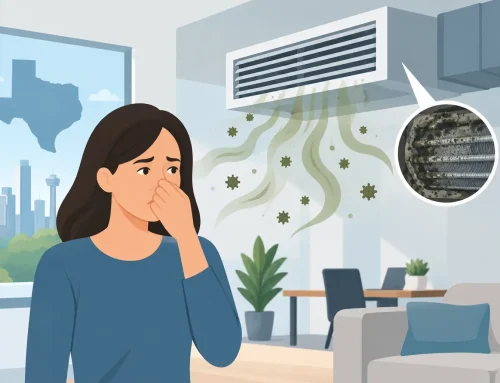
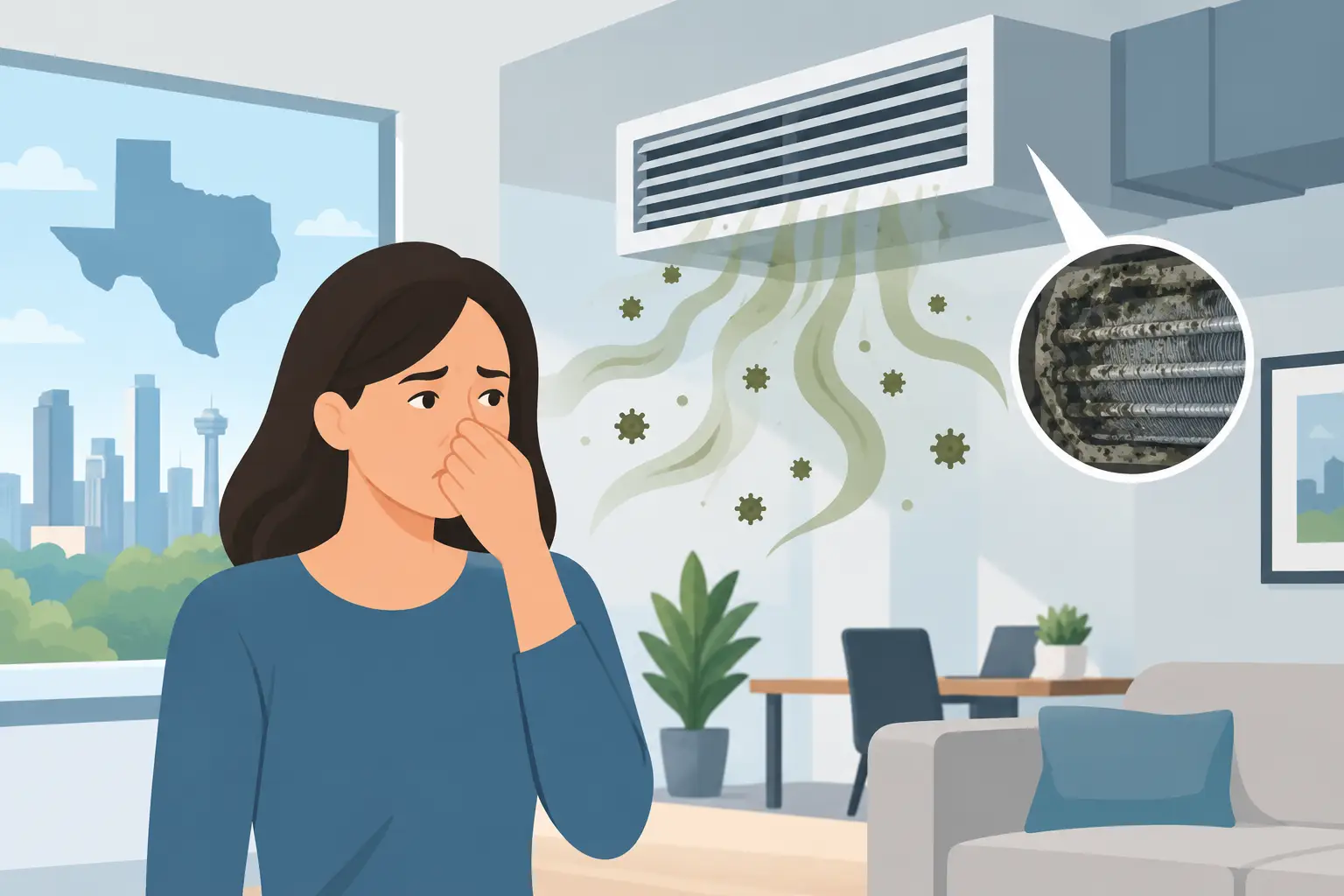
A drain clog does not always announce itself with a puddle. Watch for a musty smell near your indoor unit, standing water around the air handler, or moisture on the floor beneath a closet-mounted system. If your air conditioner suddenly stops working while the thermostat still calls for cooling, a tripped float switch could be the reason.
Other warning signs include visible water in the secondary drain pan, staining on the ceiling below an attic unit, unusual humidity indoors, or water dripping from a pipe near the outside of your home. Water should not be pouring from a secondary drain outlet. That outlet is often a warning that the primary line is blocked.
For commercial properties, look for water near mechanical rooms, ceiling tiles with stains, or complaints of damp or humid air in a particular area. A clogged condensate drain may seem small compared with a failed compressor, but it can disrupt comfort, create slip hazards, and lead to expensive repairs if it is ignored.
Why Texas Heat Makes Drain Problems More Likely
The harder your system runs, the more condensate it produces. During the hottest months, a properly operating AC may run for much of the day, especially in homes with high occupancy, frequent door traffic, older insulation, or larger south- and west-facing windows.
That steady moisture creates favorable conditions for buildup in the drain system. A line with a slight sag, poor slope, damaged fitting, or an improperly configured trap can hold water and collect debris faster. Drain issues may also show up after a long stretch of mild weather, when a line has had time to dry out and buildup becomes harder before the next heavy cooling cycle.
The answer is not to pour random household chemicals into the pipe. Some products can damage components, create fumes, or fail to address a deeper blockage. Bleach, in particular, is often suggested online, but it can be harsh on certain materials and may not be appropriate for every system. A technician can recommend the right cleaning approach based on your equipment and drain configuration.
Safe Steps Homeowners Can Take
Homeowners can help reduce drain trouble between service visits, but the goal should be prevention, not taking apart equipment without the right tools. Start by changing your HVAC filter on schedule. A dirty filter allows more dust to circulate and can contribute to debris around the evaporator coil and drain pan. It can also restrict airflow, creating separate moisture and freezing concerns.
Keep the area around the indoor unit clean and dry. Do not store boxes, paint, cleaning supplies, or other household items where they block access to the unit or make it harder to spot a leak. If your system is in the attic, check the area periodically for visible water in the emergency pan or signs of ceiling staining below.
You can also look for the drain line outlet outside your home and make sure it is not buried by mulch, dirt, landscaping, or debris. Avoid sealing or capping an outlet because it looks untidy. That pipe needs a clear path for water to leave.
If you see active leaking, turn the system off if it is safe to do so and call for service. Continuing to run an AC with a backed-up pan can turn a manageable drain clearing into a repair involving flooring, drywall, or electrical components.
What Professional Drain Service Includes
During preventive HVAC maintenance, a technician should inspect the condensate system along with the rest of the cooling equipment. This is more than a quick glance at the drain line. Proper service can include checking the drain pan for rust or cracks, clearing the line, confirming proper drainage, inspecting the trap and fittings, and testing any float safety switch.
The technician may also inspect the evaporator coil and blower area. If a drain line repeatedly clogs, the underlying problem may be more than normal buildup. A dirty coil, excessive dust in the system, poor drainage design, a cracked pan, or a unit that is not level can all contribute to repeat issues.
For an older system, the best solution depends on the condition of the equipment and the cause of the problem. A repaired or rerouted drain line may be all that is needed. If the indoor unit has significant corrosion, recurring water damage, or multiple age-related issues, your technician should explain the options honestly. A drain problem alone does not mean you need a new HVAC system.
How Often Should You Schedule Condensate Drain Maintenance?
For most Texas homes, professional HVAC maintenance twice a year is a sensible schedule: once before the cooling season and once before heating season. The cooling visit is the key opportunity to inspect and clear the condensate drain before summer demand peaks.
Some properties need more frequent attention. Homes with pets, high indoor dust, heavy AC use, attic-mounted equipment, or a history of drain clogs may benefit from additional checks. Restaurants, offices, retail spaces, and other commercial buildings often have longer operating hours and more occupants, so their maintenance needs should be based on equipment use rather than a one-size-fits-all calendar.
There is a trade-off to consider. Waiting until a clog causes a shutdown may save a small amount in the short term, but emergency service, lost cooling, and water repairs can cost far more. Routine maintenance does not eliminate every possible breakdown, but it gives your HVAC team a chance to catch simple problems while they are still simple.
Protect Comfort Before Water Finds Its Way Out
Your AC should cool your home or business, not leave you checking ceilings and closets for leaks. A clear condensate drain supports reliable cooling, helps protect the equipment around it, and reduces the chance that a busy summer day turns into an avoidable water-damage problem.
If you have noticed dripping water, musty odors, a sudden AC shutdown, or repeat drain clogs, it is worth getting the system checked before the next stretch of Texas heat. Custom Climates can help you understand what is causing the issue and recommend the repair that fits your property, comfort needs, and budget.




Leave A Comment