
A musty smell that greets you when the AC starts is more than an annoyance, especially when your system is working overtime through a North Texas summer. If you are asking why HVAC smells musty, the short answer is usually moisture. Somewhere in or around the system, dampness, dust, or organic buildup may be creating an odor that gets carried through your home or business.
The good news is that a musty HVAC smell does not automatically mean you need a new unit. In many cases, the issue can be corrected with maintenance or a targeted repair. The key is finding the source before a small drainage, airflow, or indoor air quality problem affects comfort, efficiency, or the condition of your property.
Why HVAC Smells Musty When the System Turns On
Your air conditioner removes humidity from indoor air as it cools. That moisture collects on the indoor evaporator coil and drains away through a condensate line. Under normal conditions, the coil dries between cycles and the drain system carries water out safely.
In Texas, however, high outdoor humidity and long cooling cycles can give moisture more opportunities to linger. When dust, pet dander, insulation fibers, or other particles settle on a damp coil, drain pan, or nearby surface, they can create the stale, earthy smell people describe as musty. The blower then circulates that odor through supply vents.
The timing of the smell offers a useful clue. An odor that appears only when cooling begins often points to the indoor coil, drain pan, drain line, or air handler. A smell that continues even when the system is off may be coming from a separate moisture issue in the building, such as a damp closet, attic, wall cavity, or crawlspace near ductwork.
Common Sources of a Musty HVAC Odor
A dirty evaporator coil
The evaporator coil sits inside the indoor portion of your HVAC system, where it absorbs heat and moisture. Because it is frequently wet during cooling season, it can collect a film of dust and buildup if filters are neglected or airflow is restricted. That buildup can produce odors and reduce the coil’s ability to cool efficiently.
Coil cleaning is not usually a do-it-yourself job. Access can be limited, and the delicate fins can bend easily. A technician can inspect the coil, clean it appropriately, and check whether poor filtration or another airflow concern is causing it to get dirty again.
A clogged condensate drain line or drain pan
Your system’s drain line has one job: move condensation away from the air handler. If it becomes partially blocked by algae-like growth, sludge, dust, or debris, water may drain slowly or back up into the pan. Standing water can create a musty odor and, if ignored, may lead to water damage around the unit.
Warning signs include a wet area near the indoor unit, a full drain pan, a float switch shutting the system off, or visible water at the drain outlet. Do not keep resetting a system that has stopped because of a drainage safety switch. That switch may be preventing an overflow.
A filter that is overdue for replacement
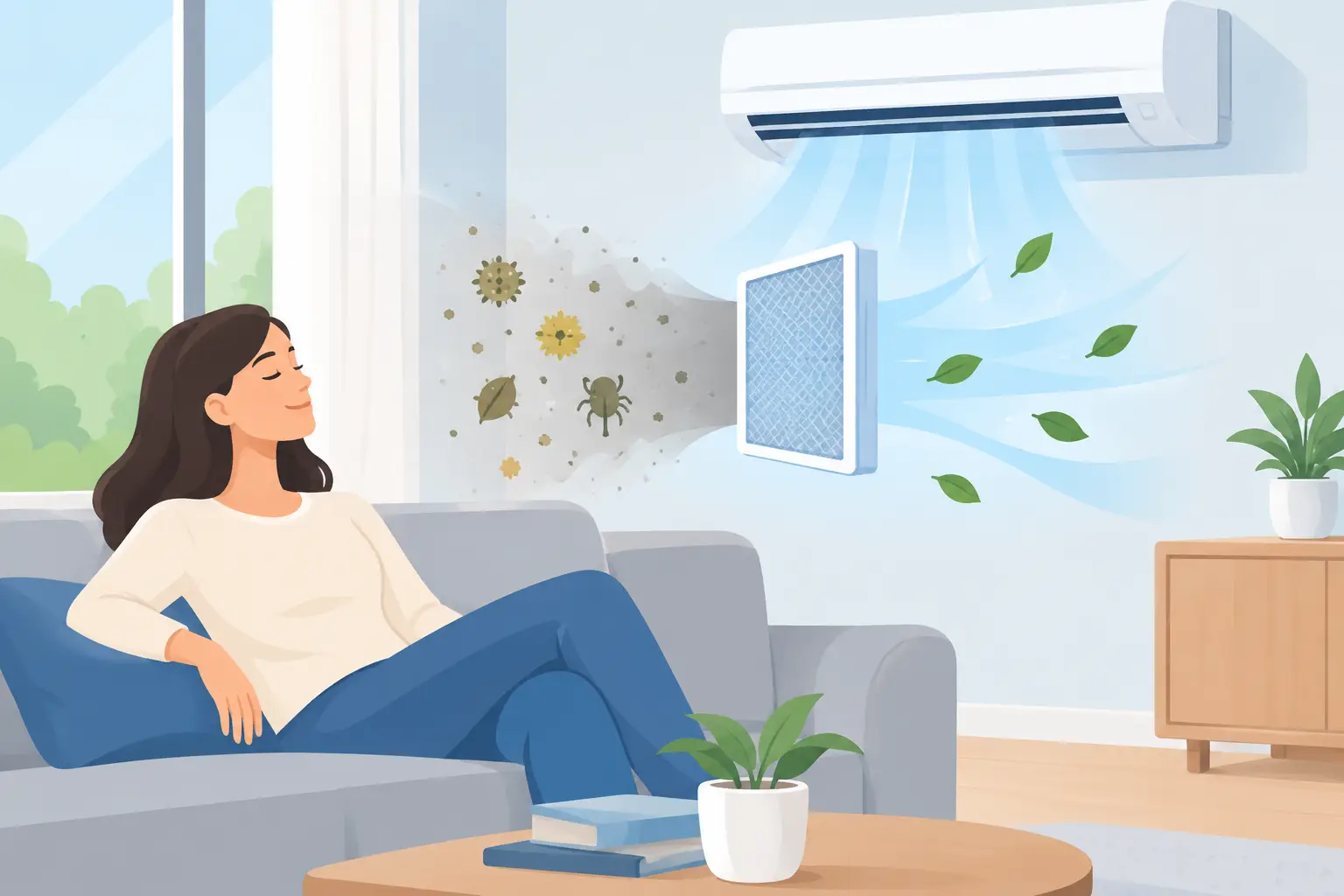
A packed air filter can hold dust and absorb moisture from the air stream. It also restricts airflow, which can make it harder for the evaporator coil to dry and easier for contaminants to collect inside the system.
Most homes benefit from checking the filter monthly and replacing it on the schedule recommended for that filter and household. A busy home with pets, construction dust, allergy concerns, or frequent HVAC use may need more frequent changes. A filter is a simple item, but using an overly restrictive filter can also cause airflow problems. The right choice depends on your equipment and indoor air needs.
Dirty ductwork or duct insulation issues
Ducts can collect dust over time, but dust alone does not always explain a strong musty smell. More concerning is moisture entering ducts through a leak, poor insulation, damaged duct wrap, or condensation around metal ductwork in an unconditioned attic.
If the odor is strongest from one or two vents, or if certain rooms feel unusually humid, a duct inspection may be worthwhile. Cleaning ducts without addressing a moisture source can be a short-lived fix. The underlying leak, insulation problem, or humidity issue needs attention first.
High indoor humidity
Sometimes the HVAC equipment is functioning, but it is not running long enough or removing enough moisture to control indoor humidity. An oversized system can cool the air quickly and shut off before it has time to dehumidify properly. A system with incorrect airflow, low refrigerant, a malfunctioning blower component, or aging equipment may also struggle to manage humidity.
That is why a musty smell can be a comfort clue, not just an odor issue. Rooms that feel cool but clammy, windows that show frequent condensation, and a persistent damp smell may all point to humidity levels that deserve professional attention.
A moisture problem outside the HVAC system
Not every musty smell is created by the HVAC unit. The system may simply be moving air past an existing source. A plumbing leak, roof leak, wet carpet, poorly ventilated bathroom, damp storage area, or water intrusion near an exterior wall can all affect indoor air.
If you notice staining, soft drywall, visible moisture, or a smell that is strongest in one location, address that building issue promptly. An HVAC inspection can help rule out the system, but a complete solution may involve a plumber, roofer, or water-damage professional as well.
What You Can Check Safely Before Calling
Start with the easy, low-risk checks. Replace a visibly dirty filter with the correct size and type. Look around the indoor air handler or furnace closet for water, and make sure the area is dry and clear of stored items. Outside, keep leaves, grass clippings, and other debris away from the condenser so the system can move air properly.
You can also note when the smell occurs. Does it happen only in cooling mode? Is it strongest in one room? Did it begin after a heavy rain, a drain backup, remodeling work, or a long period when the system was off? Those details help a technician diagnose the cause faster.
Avoid spraying fragrances, bleach, or cleaning products into vents, drain openings, or equipment cabinets. Covering the odor does not solve the moisture issue, and the wrong chemical can damage components or introduce irritating fumes into the air stream.
When a Musty HVAC Smell Needs Professional Service
Schedule service sooner rather than later if the smell is persistent, getting stronger, or paired with poor cooling, water leaks, reduced airflow, unusual noises, or frequent system shutoffs. Businesses should also respond quickly when employees or customers notice a recurring odor in shared areas, since comfort and indoor air quality affect everyone using the space.
A professional inspection should look beyond the filter. The technician can assess the evaporator coil, blower area, condensate pan and drain line, electrical safety switches, duct condition, refrigerant performance, and humidity levels. This is where a repair-first approach matters. The right answer may be cleaning a coil, clearing a drain, sealing ductwork, correcting airflow, or recommending an indoor air quality solution. Replacement is only worth discussing when the system’s condition, age, repair history, and efficiency support that decision.
At Custom Climates, we believe customers deserve a clear explanation of what is causing the problem and what each repair option means for their comfort and budget. A musty odor should lead to honest troubleshooting, not pressure to replace equipment you may not need.
Preventing Musty Smells From Coming Back
Preventive maintenance is the best defense because it addresses the parts of your system that handle moisture every day. During a seasonal visit, the condensate drain can be checked, the coil and blower area can be inspected, electrical components can be tested, and airflow concerns can be caught before they become a breakdown on a 100-degree afternoon.
Keeping humidity under control also matters. For some properties, that may mean correcting a duct or equipment issue. For others, a properly selected whole-home dehumidification or air-cleaning solution may make sense. There is no one-size-fits-all answer, particularly in older homes, larger commercial spaces, or properties with uneven temperatures from room to room.
A clean, dry HVAC system should fade into the background while it keeps your family, employees, and customers comfortable. If yours is sending a musty message each time it starts, give it attention now, while the solution may still be simple.




Leave A Comment